
Photos courtesy of Raffy Cabrera, Sace Natividad, Myra Ho, Irvin Arenas, and Kyle Venturillo
Your honor, the verdict is in—Bar Boys: The Musical is back in session, and this time, the case for greatness is stronger than ever. Transferring from its intimate Blackbox Theater home in Circuit Makati to the larger, acoustically refined Hyundai Hall in Ateneo de Manila University, the reimagined production grows in both scale and ambition. With seating for over 800 viewers, the new venue allows for enhanced lighting and multi-level staging that amplify the show’s energy and emotional scope, turning a breakout hit into a confident, full-fledged theatrical event.
Directed by Mikko Angeles with music by Myke Salomon and book and lyrics by Pat Valera, this homegrown musical presented by Barefoot Theatre Collaborative isn’t just a retelling of Kip Oebanda’s 2017 film. Rather, it’s a spirited reinvention that asks: When the system is broken, what kind of lawyer, or person, will you choose to be?
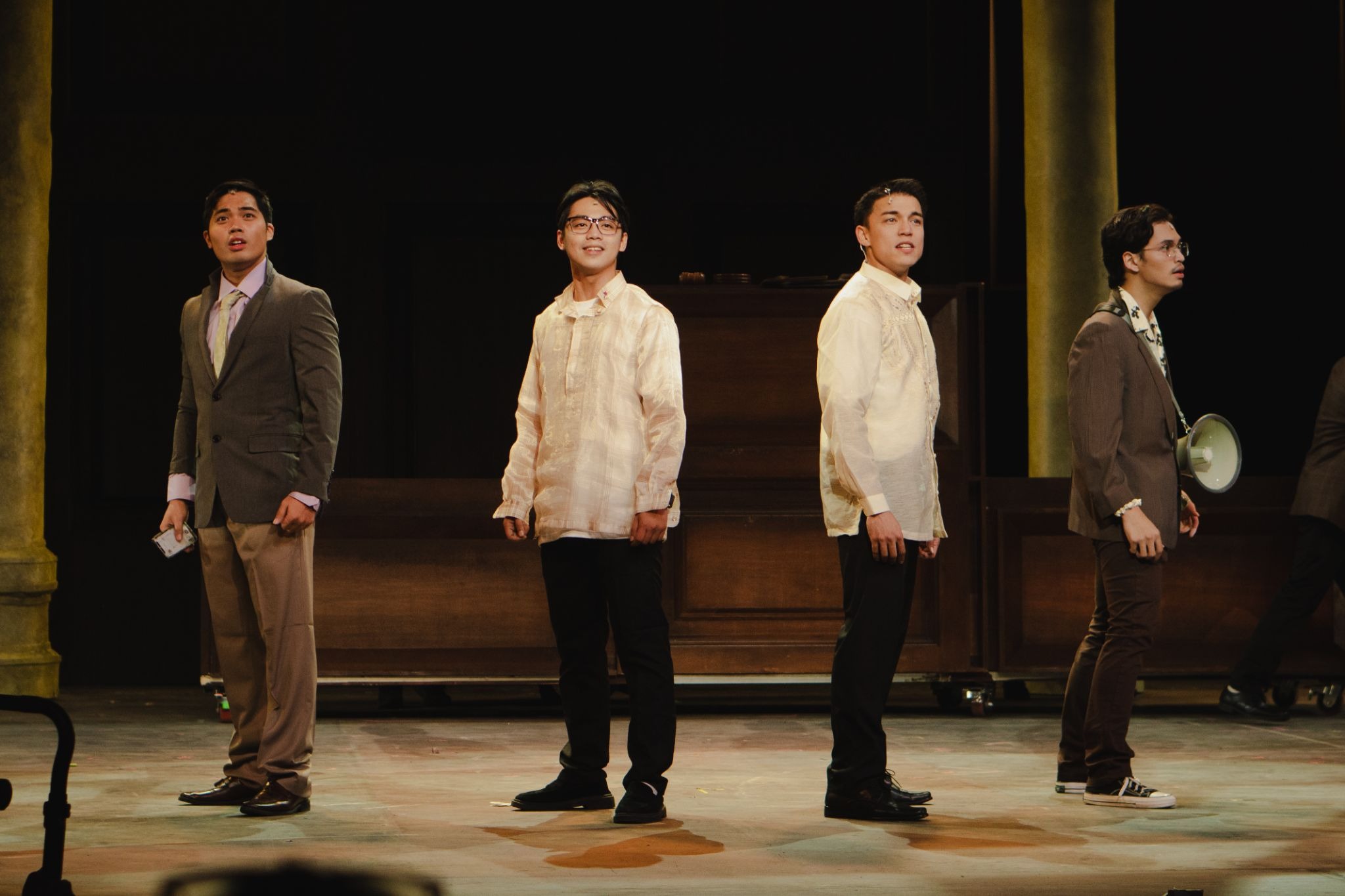
Rebuilt from the ground up, Bar Boys sheds its previous minimalist setup for a sweeping proscenium stage that bursts with motion—rotating staircases, towering shelves, and even a massive Lady Justice watching silently as the characters grapple with morality and ambition. The new staging feels like a graduation of its own, not only in size, but in soul. With lighting cues that mimic the glow of a computer screen and blocking that mirrors the rhythm of a video game’s leveling-up sequence, Bar Boys: The Musical turns the grind of law school into a quest without trivializing it. Each act feels like a stage cleared, each exam a boss fight, and each ethical dilemma a test of character rather than skill.
With its heightened scale and sharpened artistic choices, this staging asserts itself as a bold leap forward—presenting the audience with overwhelming evidence of its growth and delivering a verdict of artistry that’s impossible to overturn.
The price of ambition
If law school is the battlefield, Bar Boys shows that no one leaves unscathed. Its tagline, “Never ready, only prepared,” captures the essence of every aspiring lawyer. By extension, every young dreamer navigates a world that demands more than it gives. Through its recurring motif of transactions—malayang magdasal, may singil ang pangarap, karapat-dapat tayo mangarap—the musical deftly ties personal ambition to systemic critique, showing how every choice comes with a cost, and every victory, a compromise.
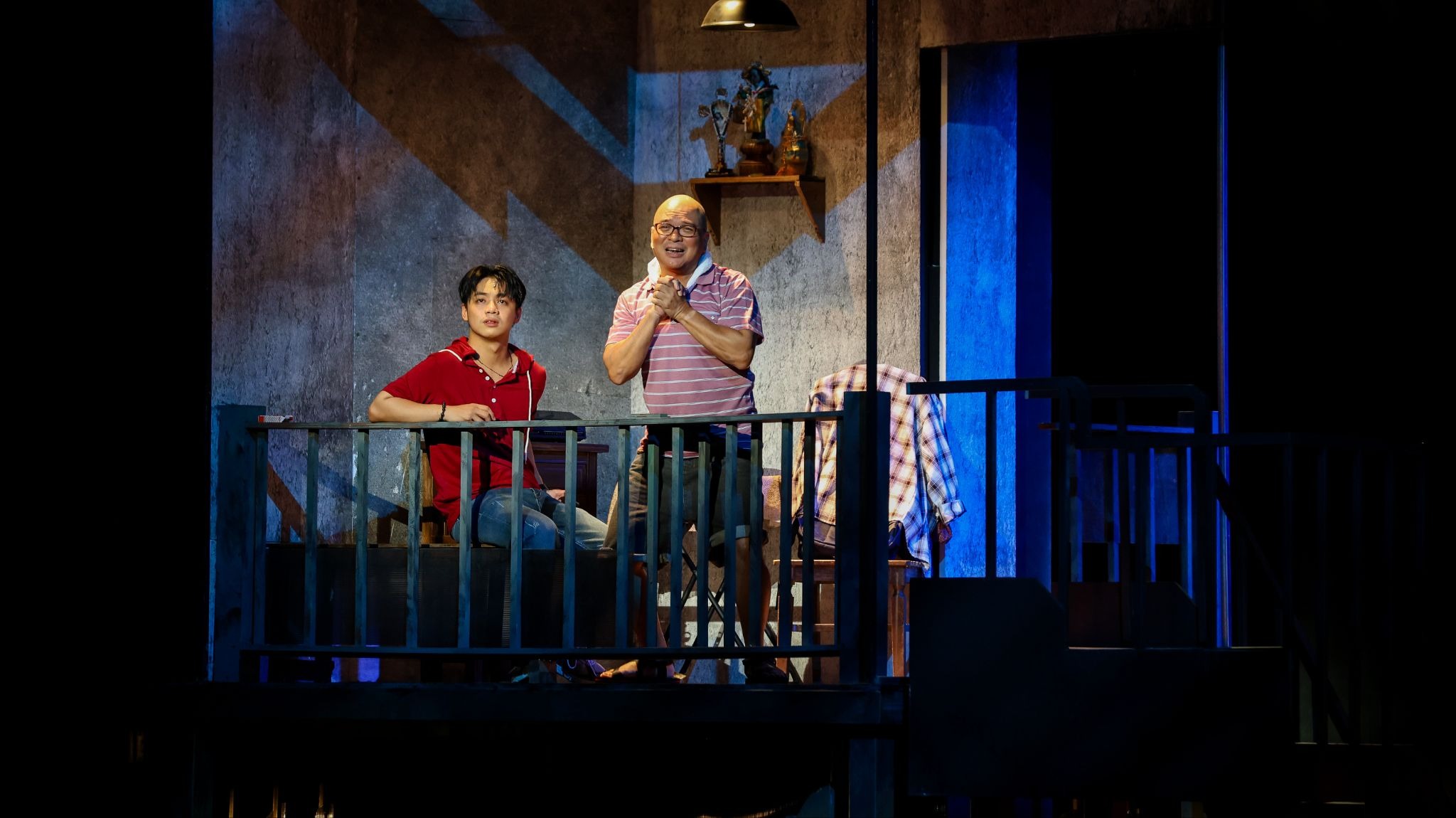
Through Valera’s script and Salomon’s score, the boys’ friendship unfolds as a shared mission to “level up” through law school, a clever gamified metaphor that captures the grind of endless exams and moral battles. However, as life deals each of them different fates, the game glitches into reality and suddenly, every move has consequences. Erik (Benedix Ramos) bears the weight of his father Paping’s (Juliene Mendoza) sacrifices, Chris (Alex Diaz) wrestles with the shadow of his corrupt father (Nor Domingo), Torran (Jerom Canlas) battles for acceptance, and Josh (Omar Uddin) charts his own path away from conformity.

Compared to the film, the musical’s extended runtime allows its story and characters to breathe. Here, the four boys aren’t just future lawyers; they’re walking contradictions, each embodying a distinct facet of what it means to chase justice in an unjust system. The added depth in Erik and Paping’s storyline, particularly the buildup to the new case seeking justice for Paping and other victims of a workplace accident, sharpens their relationship, transforming what was once a simple underdog narrative into a more urgent commentary on how power bends the law, and on what must be lost, traded, or defended in the fight to make it right. Even so, flashes of humor, smart, timely, and unmistakably Filipino, cut through the cracks of the show’s heavier themes. From witty jabs about the system to cheeky one-liners that echo everyday banter online, Bar Boys proves that satire, when wielded with purpose, can hit just as hard as any gavel. Across its restagings, the production remains attuned to its moment—listening to the pulse of its audience, the shifting terrain of justice, and the persistent hope of the youth.
Beneath the heavy robes of justice lie human costs, and the show never lets us forget it. The result is an ensemble that thrives in its contradictions: hopeful yet bitter, funny yet devastating, idealistic yet painfully aware of how ideals crumble in the face of injustice. Each act unfolds like a case file, presenting evidence of who we are and who we might become when faced with moral compromise. When the cast takes their bows, we’re left with the same realization that the boys reach onstage: The good can always be better, but only if we dare to do the work.
Dear future lawyers, definitely singers
Bar Boys: The Musical’s songs are at their strongest when they function as narrative vessels that move the plot forward, deepen character arcs, or distill a moment of emotional clarity. The musical takes on the test of turning intimidating law into fun and easily digestible music, like one unique musical number whose lyrics were the Philippine constitution. With this, many numbers are laced with nuggets of wisdom or moral insight, reflecting the heart that comes with pursuing law.
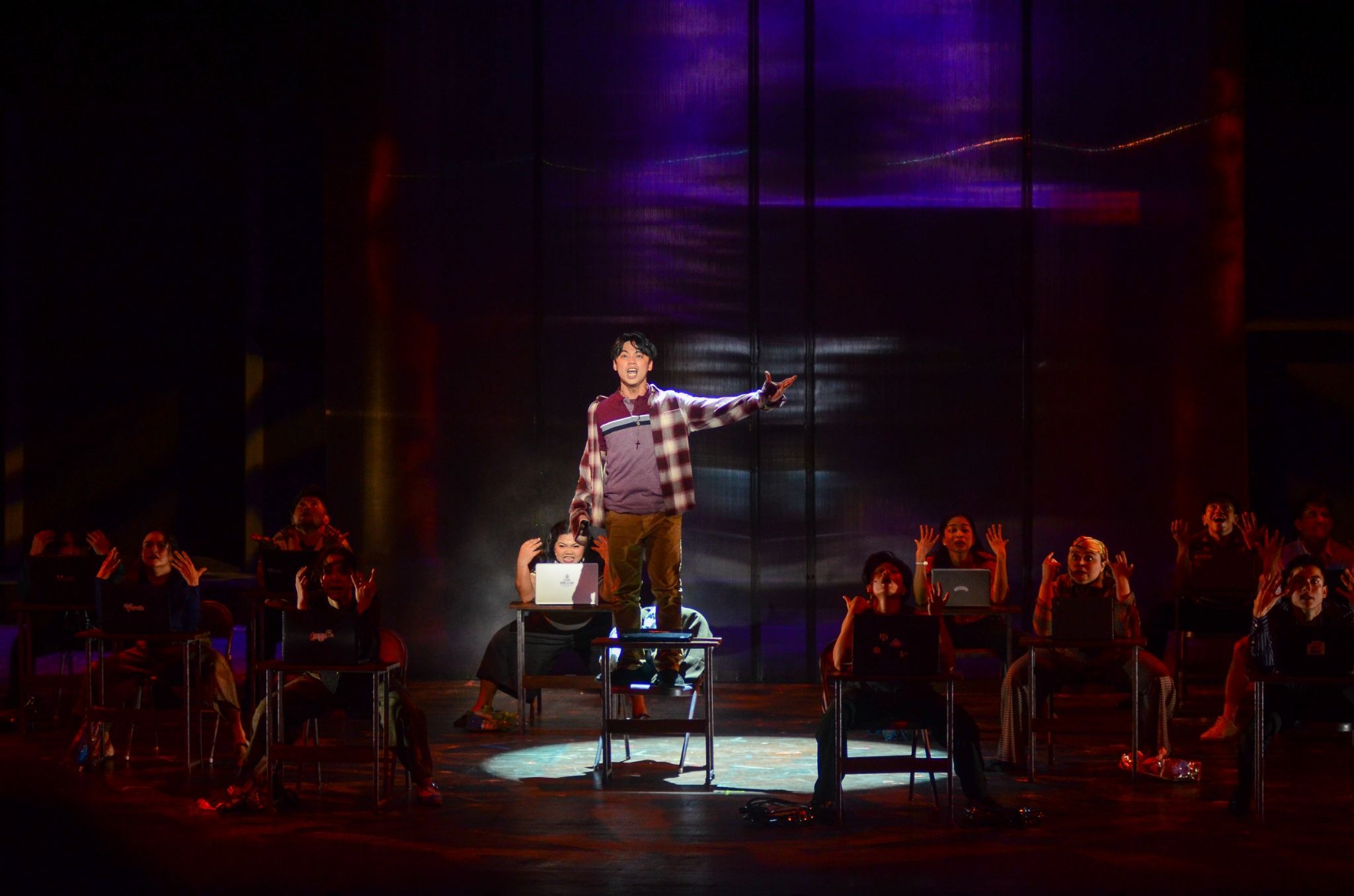
However, the challenge lies in how much each song tries to carry. At times, a single number shifts thematically with its music. With much to say about the heart of what Bar Boys is about, too many messages weigh too much for a single song, to the point where numerous core messages get muddled or stretched thin. Some songs seemed to overstay their welcome, not because they lacked heart, but because they lacked focus.
While Bar Boys’ strength comes in musical storytelling, sometimes the score leans toward being functional rather than memorable. Few melodies linger after the curtain call, and some songs feel structurally scattered, shifting gears mid-verse without finding a clear hook to anchor the listener. Occasionally, some lyrics reach for contemporary idioms in an effort to sound culturally attuned. Lines like, “So go ahead and cringe / Let me spell “LOL,” “LMFAO,” land awkwardly, coming off more from the writer’s hand rather than the character’s voice.
That said, when a song does find its center, when the melody, lyrics, moral, and story are all pulling in the same direction, it leaves its mark long after its scene. Numbers like Ang Hirap Mangarap, Daan ng Pag-ibig, and Karapat-dapat Ka stood out precisely because they are streamlined—emotionally focused, musically coherent, and narratively potent. They anchor the medium by going beyond the rigid exterior of law and finding the human at the center. These numbers in particular distill the show’s deepest tensions: the cost of ambition, the ache of identity, and the quiet grace of being told you’re worthy, even when the world says otherwise.
Even as the musical explores a wide range of tones and themes, what remains consistently compelling is the cast’s vocal strength. Every character, regardless of narrative weight, is given a moment to testify with clarity and emotional truth through musical numbers. Whether it’s a solo drenched in longing, a comedic duet, or a group number pulsing with camaraderie, the performers meet the material with full-bodied commitment. In a show that wrestles with identity, law, and belonging, it’s the raw, resonant, and unapologetically present voices that carry the heart of the musical.

The bar’s been set
The set design of Bar Boys: The Musical is a visual argument in itself as a deeply layered, deliberate response to the emotional terrain of the show. One of its most striking features is the dynamic, puzzle-like set, where each scene change reveals a broken piece of a larger whole. These scattered elements slowly accumulate, and by the time the show reaches its emotional peak—what might be considered its 11 o’clock number—they converge into a sweeping set piece that feels earned. The set becomes a narrative vessel where the physical space mirrors the emotional resolution, and the audience sees, quite literally, how everything fits.

Separate from this evolving landscape is the cracked Lady Justice sculpture, which stands as both symbol and space, and one of the most notable set pieces of the musical. A certain scene will reveal a clever staging choice that turns the towering and fractured statue into a site of power, tension, and irony. It’s a set piece that cross-examines the very idea of justice, asking whether the law protects or punishes, dignifies or distorts.
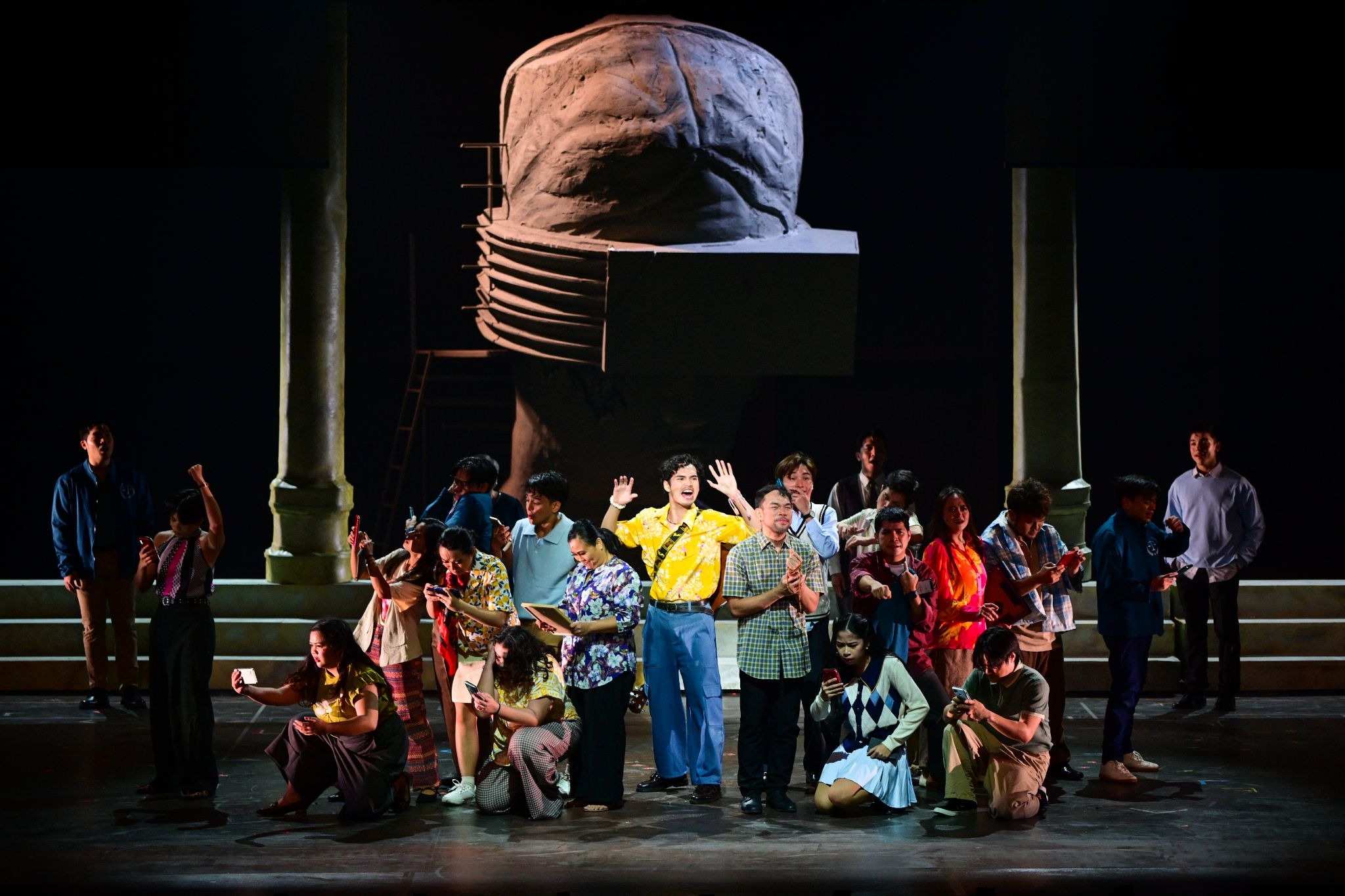
The move to a larger venue like Areté is undeniably ambitious, and while the production mostly rises to the occasion, there are moments when the stage feels a bit too open—an understandable challenge when trying to fill such a vast space. This shift is especially felt coming from the intimacy of their previous, smaller 360-degree theatre, where proximity heightened emotional stakes. While traces of that closeness remain, Bar Boys compensates with grander set pieces and big ensemble numbers that make full use of the expanded scale, its strongest evidence on the courtroom floor.
Nonetheless, the restaging finds a home in scale and in spirit, capturing the intensity, absurdity, and quiet heroism of law school that is larger than life, but never disconnected from it.
Crossing the line
From Bar Boys: The Musical’s intimate beginnings to its now expansive staging, the production dares to ask harder questions, take bolder risks, and reach for deeper truths. It recognizes that the logic that governs law and the affectivity that drives theater seem worlds apart; one demands order and the other thrives in emotion. Yet when the rigor of jurisprudence collides with the vulnerability of song, the result is not just a show, but a story that honors the lives it represents. At the end of the day, both law and theatre exist for the people—each striving, in its own language, to serve something greater than itself. In original Filipino musical excellence, Bar Boys raises the bar not only in craft but in conviction. It does so by carrying the weight of every dreamer who’s stood at the edge of compromise, trying to change a system that resists change, and still choosing to cross the line.
Ava Dumaup is an AB Communication sophomore living in the in-betweens. Half prayers and half manifestos, her writing is threaded with humor and horror and cracked-mirror holiness--love letters to the city, and to the girl writing in it. She's noisier on her Substack @kidults and even more annoying on her personal-turned-zine IG @arkvea
Julia Uy is an AB Communication junior with a minor in Public Management who writes to remember and reimagine the world she inhabits. Drawn to stories that bridge worlds—between truth and tenderness, people and purpose—she believes in the quiet belief of trusting that everything works out in its own time. Through her words, she hopes to make sense of both the fleeting and the forever.
We are calling for contributions for the next set of articles to be featured right in our next folio. Come and submit your works today!


